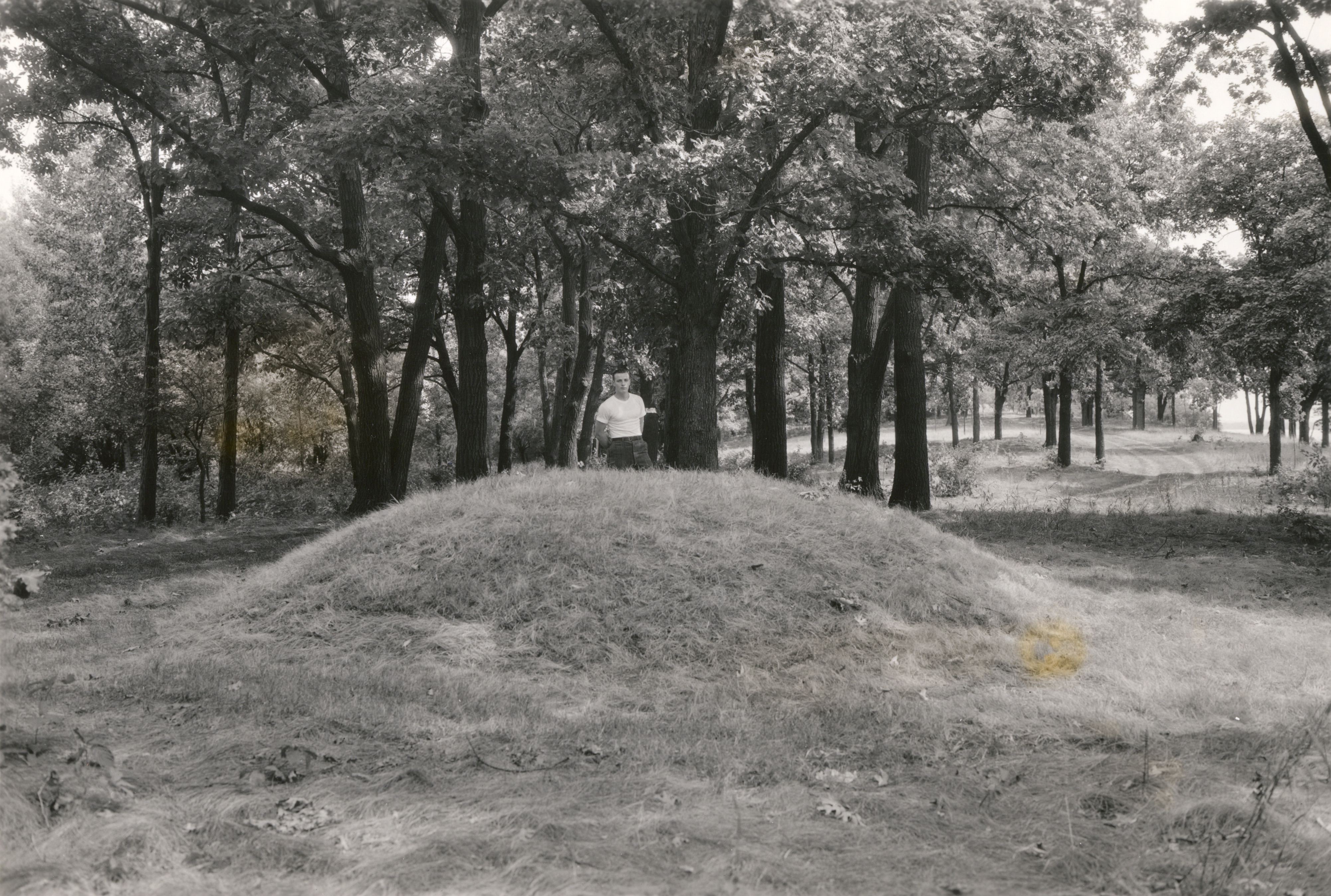
The following experimental digital documentary poem is composed of citations of William Ellery Leonard's new verse translation of the Old English poem Beowulf (1923), Leonard's personal experience narrative of taking part in archaeological fieldwork with Charles E. Brown at an Indigenous Ho-Chunk mound group on the shore of Lake Mendota, in an unpublished manuscript of an autobiographical case study located in the University of Wisconsin—Madison Archives (1920), and "Governors Island," a Ho-Chunk narrative of Lake Mendota by a storyteller once known, collected by Brown in Lake Mendota Indian Legends (1927).
When this MOUND web page is loaded and/or reloaded, server-side code selects and loads a random collection of lines from a relational database of citations:
From the east a light rose— God's beacon bright.
Around the grass of the field (I think that there were some).
Turning. Then he scattered stones over its surface and.
To fend us from the whale-fish. He could no whit from me.
With a close friend down to the lower end of the big lake.
Water spirits (wak 'tcexi) live in the deep water off the.
Sailor-folk in ferrying the fords of the main.
Wooded shores, in a deserted region near a few summer cottages.
Indian canoes and people are drowned. At night they crawl.
Under the vault of the heavens by night a fight more fierce.
And frantically. If I had been drowning out in the lake below.
The local r**men. When they are angry they cause the waters.
Float o'er the sea-flood swifter— and I from him was loath.
Timid in his absence.
Shore of Governors Island. Only a few old men have ever.
